How Painting Contractors Create Accurate Estimates and Quotes?
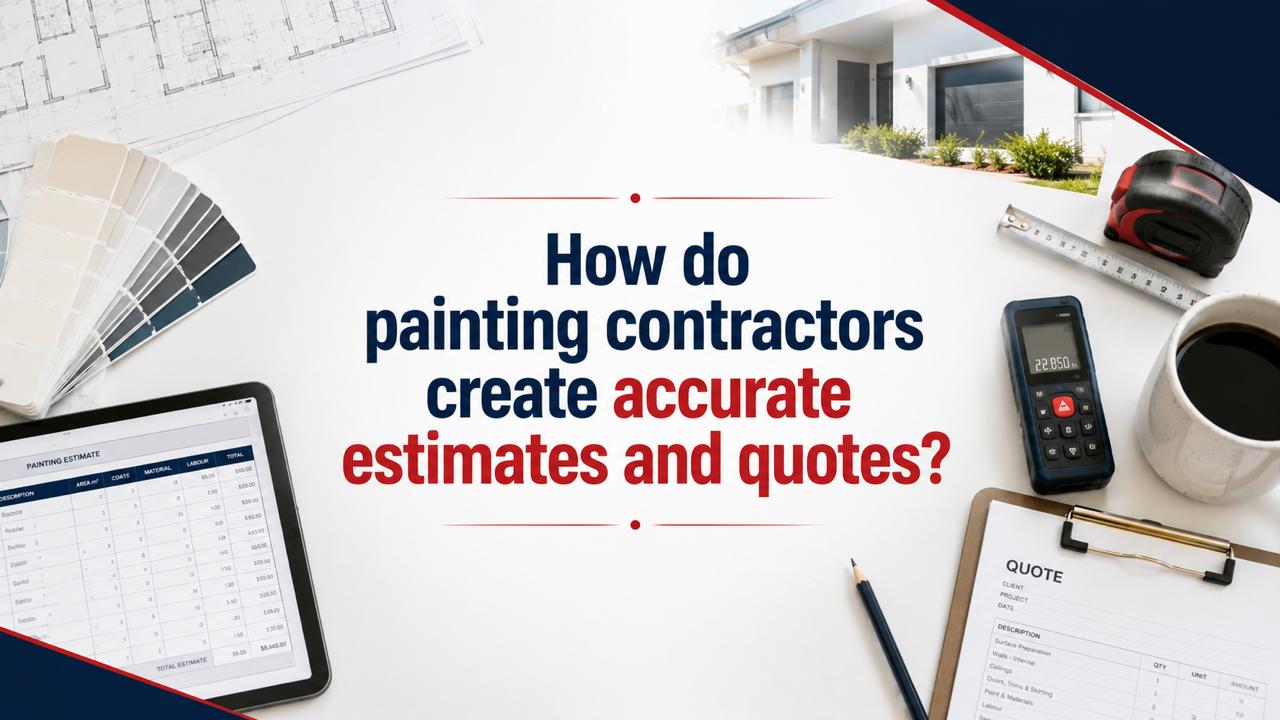
Painting contractors create accurate estimates by measuring paintable surfaces, calculating labour hours based on production rates, factoring in materials, surface prep, and overheads, then applying a profit margin. Most professional contractors use a combination of area-based take-offs and hourly rate calculations to arrive at a final figure.
Getting a painting quote that actually reflects the real cost of a job is harder than most people think. Ask ten different contractors to price the same house, and you might get ten different numbers. That’s not always because someone is trying to rip you off. More often, it comes down to method, experience, and how well the estimator understands what the job actually involves.
Whether you’re a painting contractor trying to sharpen your quoting process, or a property owner trying to make sense of the numbers in front of you, this guide breaks down exactly how professional painting estimates are built, what drives costs up or down, and where most people go wrong.
By the time you finish reading, you’ll have a clear understanding of the estimating process from start to finish, along with practical tools and resources to help you move forward with confidence.
What Goes Into a Painting Estimate?
A painting estimate is not just a number pulled from thin air. It’s the result of several calculations working together, each one influencing the final price.
The core components of any professional painting estimate include:
Surface area measurements form the foundation. A contractor needs to know exactly how many square metres of surface they’re painting, whether that’s interior walls, ceilings, exterior cladding, trims, doors, or decking. Every surface type has a different production rate, meaning it takes more or less time per square metre to paint properly.
Labour costs are calculated based on how long the job will realistically take. Production rates vary depending on surface condition, paint type, and how many coats are required. As a general benchmark, interior walls typically run at around 10 to 12 square metres per hour per coat, while exterior surfaces slow things down to roughly 6 to 10 square metres per hour due to access, weather, and surface complexity.
Materials include paint, primer, fillers, tape, drop sheets, and sundries. A well-structured estimate accounts for the volume of paint needed based on coverage rates and the number of coats, not just a rough guess.
Surface preparation is one of the most commonly underestimated cost factors. A wall in poor condition, with peeling paint, cracks, or water damage, will take significantly longer to prepare than one that just needs a light sand and clean. This prep time must be costed into the estimate or the contractor will absorb the difference.
Overheads and profit margin round out the picture. A professional painting business has running costs such as insurance, vehicle expenses, tools, and administration. These need to be factored in before any profit is added on top.
How Do Contractors Actually Measure a Job?
The Take-Off Process Explained
The term “take-off” refers to the process of extracting all relevant measurements from plans or a physical site inspection. For a residential repaint, a contractor will typically walk through the property room by room, measuring wall heights and lengths, counting doors and windows, and noting any features that require special attention.
For larger commercial jobs or new builds, take-offs are often done from architectural drawings, which requires experience in reading plans and understanding how dimensions translate into actual paintable surface areas.
A quality take-off will document every surface separately, making it easy to price each element accurately rather than applying a blanket rate across the whole job.
Dual-Method Pricing for Greater Accuracy
Experienced estimators often cross-check their figures using two different methods. The first is a production-based calculation: total square metres divided by production rate equals hours, multiplied by the labour rate. The second is a market benchmark approach, where square metre rates sourced from current industry data are applied to the measured areas.
Comparing both results gives a more reliable final figure and highlights any areas where the numbers don’t stack up. This dual-method approach is exactly what powers the free painting budget calculator offered by PaintBusters Australia, which blends production hour calculations with 2025–2026 Australian industry benchmarks to generate instant, realistic cost estimates.
Why Do So Many Painting Quotes Get It Wrong?
Underquoting is one of the most common problems in the painting industry, especially among newer contractors. A contractor wins the job with a low price, starts work, and quickly realises the job is taking longer or costing more than anticipated. They either absorb the loss, cut corners, or try to add variations that weren’t in the original quote.
Overquoting is the opposite problem. A contractor covers every possible risk with padding, ends up pricing themselves out of competitive jobs, and loses work they were perfectly capable of doing profitably.
Both problems usually come back to the same root cause: the estimating process wasn’t thorough enough.
Missing prep costs, failing to account for difficult access, underestimating the number of coats needed, or simply using outdated labour rates are all common culprits. Even forgetting to include the time spent travelling to site, setting up, and cleaning up at the end of each day can meaningfully distort a quote.
Tom McCallum, founder of PaintBusters Australia and a second-generation painter who once ran one of Queensland’s largest painting businesses, puts it plainly: accurate estimating is one of the most important skills a painting contractor can develop, and it’s one that takes time, mentorship, and the right systems to get right.
The Role of Surface Condition in Estimating
Surface condition has a dramatic effect on job cost, and it’s one of the most important variables to assess before pricing any job.
A surface in good condition needs minimal preparation. Light sanding, a wipe down, and one or two coats of paint might be all that’s required. A surface with peeling paint, hairline cracks, and years of grime will need extensive prep work before a brush or roller even touches it. Stripping, patching, priming, and sanding can easily double the labour component of a job.
This is why professional estimators categorise surface condition before calculating anything else. PaintBusters Australia’s budget calculator, for example, allows users to select between light, moderate, and heavy surface preparation, which adjusts the estimate accordingly based on how preparation requirements affect total hours and material use.
If you’re a property owner, being honest about the condition of your surfaces when requesting quotes will help you get accurate figures rather than lowball numbers that balloon once work begins.
How to Quote a Painting Job: A Step-by-Step Overview
Step 1: Conduct a Thorough Site Assessment or Measurement
Start by walking through the property, or studying the plans for larger projects. Document every surface to be painted, note the surface condition, identify access challenges, and confirm the paint specification with the client or specifier.
Step 2: Complete Your Take-Off
Using your measurements, calculate the total square metres of each surface type. Keep interior walls, ceilings, trims, doors, windows, and exterior elements separated, as each carries its own production rate and material cost.
Step 3: Calculate Labour Hours
Apply relevant production rates to your measurements. Factor in the number of coats required and increase your hours for heavy preparation work, detailed cutting in, or difficult access areas. Add time for setup and cleanup at each visit.
Step 4: Calculate Material Costs
Work out how much paint is needed based on coverage rates per litre and number of coats. Add primers, fillers, tape, and other consumables. Material costs typically represent around 20 to 25 percent of a total job cost, though this varies.
Step 5: Add Overheads and Profit
Apply your overhead percentage to cover business running costs, then add your profit margin. This step is where many contractors fall short, either forgetting to include overheads entirely or setting margins too thin to sustain a healthy business.
Step 6: Review and Present the Quote
Before sending anything to a client, review the quote critically. Does it account for everything discussed on site? Is the scope of work clearly described so there’s no ambiguity about what’s included? A well-written quote protects both parties and reduces the risk of disputes down the track.
For contractors who want expert support through this process, PaintBusters Australia offers professional painting estimating and quote services with a standard turnaround of 24 to 48 hours, along with detailed estimating services that include full Bills of Quantities, take-offs with formulas, and guidance tailored to your project.
What Is a Bill of Quantities and Do You Need One?
A Bill of Quantities (BOQ) is a detailed document that lists every element of a painting job, including surface areas, quantities, materials, and associated costs. It’s commonly used on commercial projects, new builds, and any job where multiple contractors are quoting against the same scope of work.
For painting contractors, having access to a BOQ means there’s no ambiguity about what’s been included in the price. For property owners and managers, it makes comparing quotes from different contractors far more straightforward.
PaintBusters Australia’s quantity surveying service produces comprehensive BOQs and take-offs with all calculations and formulas included. This service is available for residential and commercial projects of any scale, with most measurements completed within 48 hours.
Tools and Resources to Improve Your Estimating
Free Paint Budget Calculator
For anyone wanting a quick, realistic sense of what a painting project might cost in Australia, PaintBusters Australia’s free paint budget calculator is a practical starting point. It covers interior rooms, exterior surfaces, decking, roofs, fences, commercial spaces, and more, with surface condition adjustments built in. Results are based on current 2026 Australian industry rates using the dual-method pricing approach described earlier.
It’s particularly useful for property owners planning a renovation budget, or contractors wanting to cross-check their own figures before sending a quote.
Professional Quote Services
For painting contractors who don’t yet have the systems or experience to quote confidently, outsourcing the quoting function entirely is a practical and cost-effective option. PaintBusters Australia’s quote services start from just $50 per quote and deliver accurate, detailed estimates within 24 hours. Paint specifications and a schedule of finishes are included, and in many cases no site visit is required if the right details are provided upfront.
Estimating Education
Understanding how to estimate is a skill worth developing properly. PaintBusters Australia offers an estimating course designed to bring contractors up to speed with industry-standard methods, so they can build confidence and accuracy in their own quoting over time.
When Should a Property Owner Get Multiple Quotes?
Getting more than one quote is always good practice for any significant painting project. It gives you a realistic sense of market pricing and helps identify any outliers, whether suspiciously low or unexpectedly high.
Property owners and managers can access free quotes through PaintBusters Australia’s Get a Painting Quote in Minutes service, which connects them with up to three vetted PBA Member Contractors. The selected contractor undertakes the work directly, and the service is completely free for property owners and managers.
For smaller jobs, particularly in South East Queensland, PaintBusters Australia also has small job specialists in Brisbane, Gold Coast, Sunshine Coast, and Ipswich, making it easy to get reliable help for jobs that larger contractors often won’t prioritise.
Getting Your Estimate Right From the Start
A painting project that’s correctly scoped and accurately priced is better for everyone involved. The contractor knows what they’re getting into, the client knows what they’re paying for, and there’s a much lower risk of disputes, variations, or unpleasant surprises mid-job.
Accurate estimating isn’t complicated, but it does require discipline, the right process, and the experience to know what to look for. Whether you’re a contractor building your estimating skills from the ground up, or a property owner wanting to understand the quote you’ve received, the tools and knowledge exist to make better decisions.
PaintBusters Australia’s full range of estimating and quote services is built around exactly this goal: helping painters, builders, property owners, and managers take the guesswork out of painting costs. Use the free paint budget calculator to start planning your project today, or get in touch to speak about professional estimating support.
Frequently Asked Questions
How do painting contractors calculate the cost of a painting job in Australia?
Painting contractors calculate costs by measuring all paintable surfaces in square metres, applying production rates to estimate labour hours, adding material costs, and then factoring in overheads and a profit margin. Most experienced contractors cross-check their figures using both production-based calculations and current market benchmarks for square metre rates.
How long does it take to receive a professional painting quote in Australia?
With PaintBusters Australia’s quote service, you can receive a detailed painting estimate within 24 to 48 hours of providing the required project information. In many cases, a site inspection is not necessary if sufficient details, photos, and measurements are shared upfront.
What is a painting take-off and why does it matter?
A take-off is the process of measuring and documenting every surface to be painted on a project. It forms the foundation of any accurate estimate because all labour and material calculations depend on knowing the exact quantities involved. Skipping or rushing the take-off stage is one of the most common causes of underquoting.
Can property owners get a free painting quote in Australia?
Yes. Property owners and managers can receive free quotes through PaintBusters Australia’s Get a Painting Quote in Minutes service, which connects them with up to three verified local painting contractors at no cost. The selected contractor undertakes the work directly.
How does surface condition affect the cost of a painting estimate?
Surface condition directly affects how much preparation work is needed before painting begins. A surface in poor condition with peeling paint, cracks, or water damage can require significantly more labour hours than one in good condition. Professional estimators factor this in by categorising preparation requirements as light, moderate, or heavy before calculating total job costs.