My Painter Has Done a Bad Job. What Should I Do? A Homeowner’s Guide
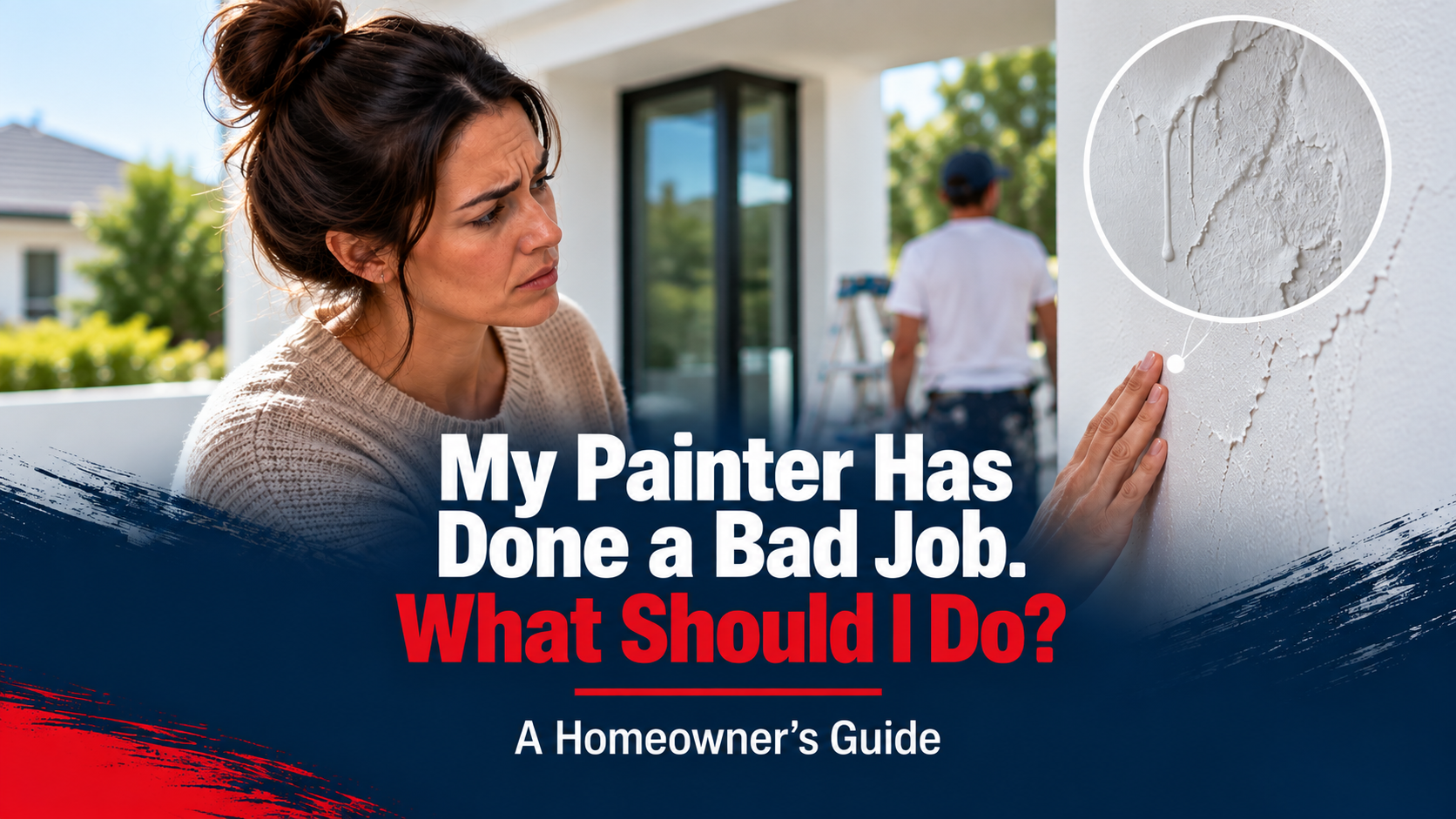
If a painter has done a bad job, stop and document every issue with clear photos before anything else. Review your quote and agreed scope of work, write down each defect, then contact the painter to discuss your concerns calmly. If the problems are disputed or widespread, an independent professional paint inspection can provide a documented assessment to support your next steps.
You’ve just finished a painting job and something feels off. Maybe the walls look patchy under the living room lights, there are roller marks running across what should be a smooth finish, or the cutting in around your skirting boards is wobbly and inconsistent. Perhaps paint has already started peeling in the bathroom, just weeks after the painter packed up their gear.
It’s a frustrating position to be in, especially after paying good money for work you expected to look sharp.
Here’s the thing though. Not every mark or minor imperfection means the whole job has failed. Paint finishes can look slightly different depending on lighting, the type of paint used, and even the time of day you’re inspecting the walls. That said, visible defects shouldn’t be ignored either. The right approach is to look closely, document what you find, and work through the issue methodically rather than reacting straight away.
This guide walks you through exactly how to do that, from spotting genuine workmanship problems to knowing when it’s worth bringing in an independent set of eyes.
How Do You Know If a Painter Has Done a Bad Job?
Poor painting workmanship usually shows up in a handful of recognisable ways. Some are obvious the moment you walk into the room. Others only become clear once the paint has fully cured or the light changes throughout the day.
Common signs include:
- Uneven coverage, where the original wall colour or primer is still visible through the topcoat
- Visible roller or brush marks across what should be a smooth, even surface
- Runs and sags, where paint has pooled and dripped down the wall before drying
- Paint drips left on skirting boards, floors, or fixtures
- Bubbling or blistering, often appearing as small raised patches in the paint film
- Peeling or flaking, particularly around windows, doors, or damp prone areas
- Cracking, which can appear as fine lines or larger splits in the paint surface
- Poor cutting in around edges, cornices, and trim, leaving crooked or overlapping lines
- Overspray or paint on surfaces that should have been protected, like light fittings or door hardware
- Patchy colour or inconsistent sheen levels across the same wall
- Poor surface preparation, which often shows as flaking, poor adhesion, or old marks bleeding through
- Visible imperfections in the wall, such as nail holes or filler marks, still showing through the finished coat
- An overall inconsistent finish from one wall or room to the next
It’s worth remembering that the seriousness of any defect depends on a few factors. The type of surface, the coating system used, how the surface was prepared, the lighting in the room, and what was actually agreed upon in the original scope of work all play a part. A small amount of roller texture on a low sheen ceiling paint might be completely normal. The same texture on a high gloss feature wall would likely be a genuine defect.
Common Painting Defects to Look For
To make things easier, here’s a breakdown of some of the most common painting defects homeowners come across, what they typically look like, and what might be causing them.
| Defect | What It Looks Like | Possible Cause | What to Document |
| Peeling or flaking | Paint lifting away from the surface in strips or flakes | Poor surface preparation, moisture, or painting over a dirty or glossy surface | Close up photos, location, and how far the peeling extends |
| Bubbling or blistering | Small raised bumps under the paint film | Moisture trapped beneath the surface, or painting in high heat or direct sun | Photos showing the size and spread of the blisters |
| Cracking | Fine lines or larger splits across the paint surface | Movement in the substrate, applying paint too thickly, or incompatible products | Photos from a distance and up close, plus the affected area |
| Uneven coverage | Original colour or primer showing through the topcoat | Insufficient coats applied, or paint applied too thinly | Photos in natural light showing the patchiness |
| Roller or brush marks | Visible lines or texture across a wall that should be smooth | Poor technique, incorrect roller nap, or paint drying too quickly | Photos taken from an angle where the light highlights the texture |
| Poor cutting in | Wavy, uneven, or overlapping lines along edges and trim | Lack of care or experience, or rushed application | Close up photos of the affected trim, cornices, or edges |
| Patchy sheen | Some areas look glossier or flatter than others on the same wall | Uneven application or mixing different batches of paint | Photos taken from multiple angles under consistent lighting |
Keep in mind this table isn’t exhaustive, but it covers the defects that come up most often when homeowners raise concerns about painting workmanship.
What Should You Do If You Are Unhappy With Your Painter’s Work?
If you’ve identified genuine issues, here’s a practical process to work through.
Step 1: Stop and document the issues
Before doing anything else, resist the urge to touch up the paint yourself or ask a different tradesperson to fix it. Once changes are made, it becomes much harder to show what the original work actually looked like.
Step 2: Take clear photographs and videos
Good quality photos are your strongest form of evidence. Take them in natural daylight where possible, and capture both close up shots of the defect and wider shots showing where it sits in the room.
Step 3: Review the original quote and agreed scope
Go back to the paperwork. Check what was actually included in the quote, how many coats were specified, what preparation work was agreed to, and what type of paint and finish was promised. This helps you separate genuine defects from things that were never part of the job in the first place.
Step 4: Make a written list of the defects
Put together a simple, room by room list. Note the location, a description of the issue, and reference the relevant photo for each one. This makes the next conversation with your painter far more productive.
Step 5: Contact the painter and explain the concerns
Reach out directly, ideally in writing, and outline what you’ve found. Stick to the facts and avoid getting into an emotional back and forth. Most painters want the opportunity to sort out a problem before it escalates.
Step 6: Give the painter an opportunity to respond or rectify the work where appropriate
Many workmanship issues can be resolved with a return visit. Give the painter a fair chance to inspect the areas themselves and propose a fix.
Step 7: Consider an independent professional inspection if the quality or cause of the defects is disputed or unclear
If you and the painter don’t see eye to eye on whether the work is actually defective, or the cause of a problem isn’t obvious, a professional paint inspection can help clarify things. We’ll cover this in more detail shortly.
Should You Pay for a Bad Paint Job?
This is one of the trickiest questions homeowners face, and it’s not one with a simple yes or no answer.
Whether you’re required to pay the remaining balance, or whether you can withhold payment until issues are fixed, generally comes down to the terms of your contract, the agreed scope of work, and the specific circumstances surrounding the job. Requirements can also vary depending on which state or territory you’re in.
We’re not able to offer legal advice here, and every situation is different. What we’d recommend instead is keeping thorough records of everything, including your quote, invoices, photos, and any written communication with the painter. If a genuine payment dispute develops, it’s worth speaking with an appropriate professional or legal adviser who can look at your specific contract and circumstances.
An independent inspection report can be a genuinely useful piece of documentation in these situations, since it provides a professional record of the condition and standard of the completed work. It’s worth being clear, though, that an inspection report doesn’t determine legal liability or automatically settle a payment dispute. It simply gives you and any other parties involved a clearer, documented picture of the workmanship.
How to Document Poor Painting Workmanship
Good documentation makes every later conversation easier, whether that’s with your painter, a mediator, or an independent inspector. Here’s how to do it properly.
- Take photographs in good, natural lighting wherever possible
- Photograph each defect both close up and from a wider angle
- Record which room and wall each defect is located on
- Keep copies of your original quotes and invoices
- Save all emails, texts, and messages exchanged with the painter
- Record the date the work was completed
- Keep any before and after photos if you have them
- Avoid editing or enhancing photos in a way that could change what they actually show
The goal here isn’t to build a case against your painter. It’s to have an accurate, honest record of what the completed work actually looks like, so that any conversation about it is based on facts rather than memory or opinion.
When Should You Get a Professional Paint Inspection?
There are certain situations where getting an independent set of eyes on the job genuinely helps move things forward. Consider a professional paint inspection if:
- The painter disagrees that the issues you’ve raised are actual defects
- You’re unsure whether the finish meets the standard that was originally agreed
- There are widespread problems across multiple rooms or surfaces
- The cause of a defect isn’t obvious to you
- You’re in the middle of a painting workmanship dispute
- You need a documented, professional assessment to refer back to
- You want an independent report before deciding on your next move
This is where a professional paint inspection can be genuinely useful. At PaintBusters Australia, our paid inspection service gives homeowners an independent, documented look at the completed paintwork, without any connection to the original painter, so you get an unbiased view of what’s actually going on.
What Does a Professional Paint Inspection Look At?
The exact scope of an inspection depends on the service and the details of your particular project, but generally speaking, a paint inspection may assess:
- Surface preparation
- Paint application technique
- Overall coverage
- Finish quality and consistency
- Visible defects such as peeling, bubbling, or cracking
- Runs and sags
- Cutting in and edge work
- Consistency of sheen and colour across surfaces
- General standard of workmanship
- Any specific areas of concern you’ve raised
Because every job is different, the areas covered in your report will reflect the specific concerns you flag and the information you provide when booking.
What Happens After a Paint Inspection?
Once an inspection has been carried out, you’ll receive a written report outlining what was found. This document can be a genuinely helpful tool when you sit down to discuss the work with your painter, since it gives both parties something concrete and specific to refer to rather than relying on differing opinions.
A painting inspection report helps you understand exactly what has been documented, in plain terms. It’s important to be clear that a report doesn’t prove negligence, establish legal liability, or guarantee a particular outcome if a dispute proceeds further. What it does provide is an independent, professional record of the condition of the paintwork at the time of inspection, which you can use to support whatever conversations or decisions come next.
If things have reached a point where you and your painter simply can’t agree, PaintBusters Australia’s painting consultancy services also include conflict resolution support to help both sides reach a fair outcome.
How to Avoid Problems With Your Next Painting Project
A bit of groundwork before your next job starts can save a lot of headaches later. Here’s what we’d suggest:
- Get a detailed, written quote before any work begins
- Confirm exactly which surfaces and areas are included
- Clarify what surface preparation will be carried out
- Confirm the paint system and finish being used
- Ask how many coats are included and what coverage to expect
- Discuss how access and surrounding areas will be protected during the job
- Keep all communication with your painter in writing
- Where practical, inspect the work at key stages rather than only at the end
- Keep photos and records throughout the project, not just at completion
If you’re still at the quoting stage for an upcoming project, PaintBusters Australia’s painting estimating and quote services can also help you understand what a fair, accurate quote should include before you commit to a painter.
Frequently Asked Questions
What should I do if my painter has done a poor quality job?
Start by documenting the issues with clear photos and a written list, then review your original quote and scope of work. Contact your painter to explain your concerns and give them a fair opportunity to respond or rectify the work. If the issues are disputed or unclear, an independent professional inspection can help provide a documented assessment to support the conversation.
What are the most common painting defects?
The most common defects include uneven coverage, visible roller or brush marks, peeling or flaking, bubbling, cracking, poor cutting in around edges, and patchy colour or sheen. The seriousness of any defect can depend on the surface, the coating system used, and what was originally agreed with the painter.
Can I get an independent inspection of a painter’s work?
Yes. An independent paint inspection can be arranged regardless of who carried out the original work. This gives you an unbiased, professional assessment of the paintwork, which can be particularly useful if you and your painter disagree about the standard of the finish.
What does a professional paint inspection report include?
A typical report documents the areas assessed, including surface preparation, application quality, coverage, and any visible defects identified. The exact contents depend on the project and the concerns raised, but the report is designed to give you a clear, independent record of the condition of the paintwork.
Should I get a paint inspection before paying the final invoice?
This depends on your specific contract and circumstances, and it’s not something we can give legal advice on. If you have genuine concerns about the standard of the work and the issue is disputed, arranging an independent inspection before finalising payment can help you make a more informed decision, backed by documented evidence.
Need an independent assessment of your painting work? Talk to PaintBusters Australia about a professional paint inspection and get a clear, documented picture of where things stand.