Got a Painting Dispute? How a Paint Inspection Can Help You Resolve the Problem
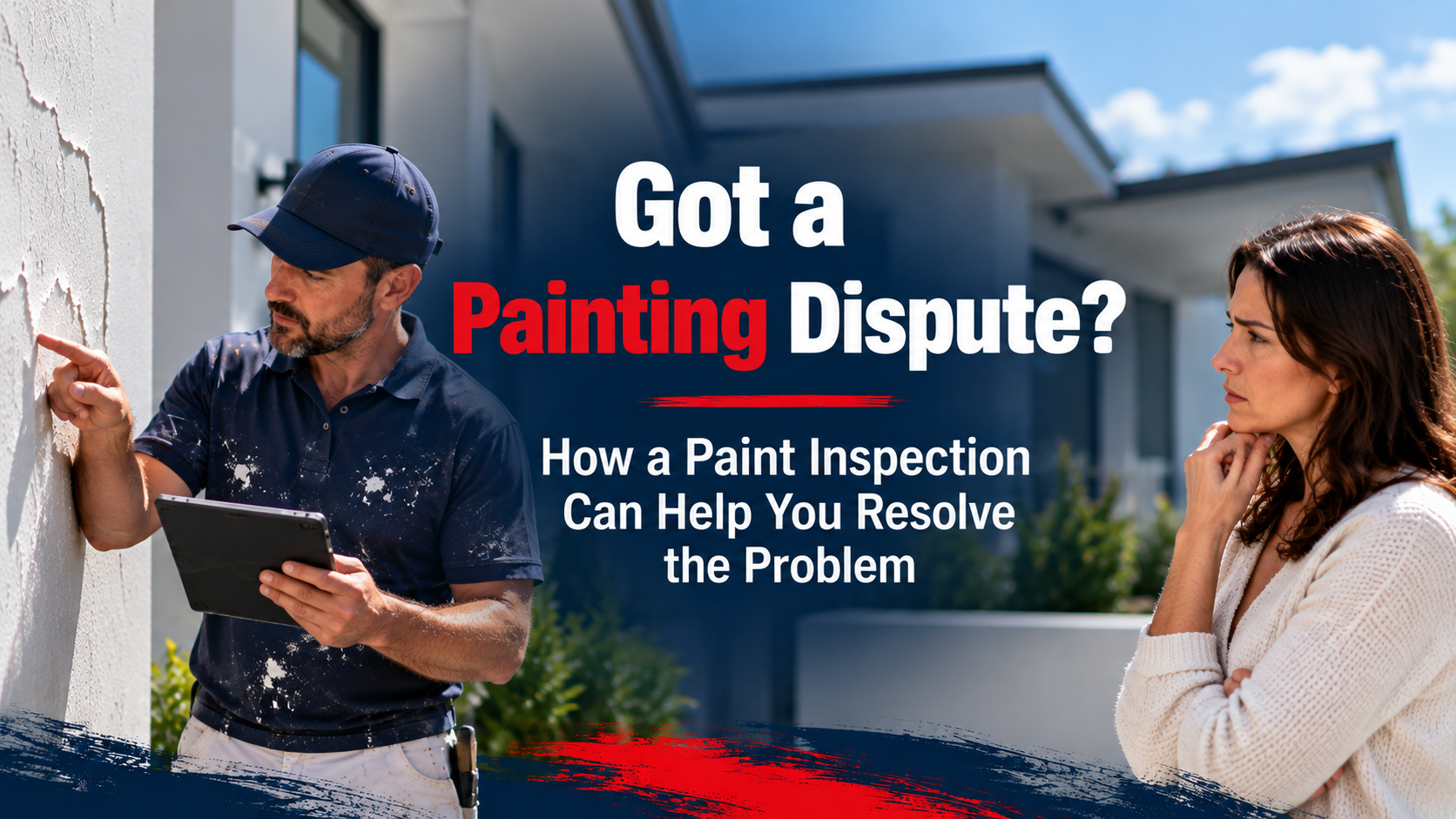
A painting dispute happens when a client and painter disagree about the quality or completeness of finished work. A professional paint inspection can document visible defects and give both sides a clearer, independent account of the paintwork’s condition. If disagreement continues after that, conflict resolution support can help both parties discuss the findings and work towards a practical way forward. Neither service guarantees a specific outcome, but together they give people a structured path forward instead of a stalemate.
You’ve paid good money for a paint job. Then you walk through the finished rooms and notice something’s off. Maybe there’s peeling near the skirting boards, patchy coverage on a feature wall, or roller marks that catch the light at certain angles. You raise it with the painter, and they tell you it’s fine, that’s just how the paint settles, or that you’re being too picky.
Sound familiar? This is one of the more common situations property owners, landlords and builders find themselves in across Australia. A painting dispute doesn’t always start with anger. Usually it starts with a simple disagreement about whether something looks right. The problem is, without a third party involved, that disagreement rarely goes anywhere productive. Both sides are just repeating their own version of events.
This article walks through what typically causes a painting dispute, what you should do when one crops up, and how a paint inspection paired with conflict resolution support can help move things along.
What Can Cause a Painting Dispute?
Painting disputes tend to follow a handful of familiar patterns. Some of the most common causes include:
- Disagreement about workmanship. The client feels the finish isn’t up to scratch, while the painter believes the job was completed to a reasonable standard.
- Painting defects. Peeling, bubbling, cracking or flaking that shows up shortly after the job wraps up.
- Poor surface preparation. Skipped sanding, filling or priming can cause problems that only become obvious weeks later.
- Inconsistent finish. Visible brush or roller marks, patchy sheen, or colour variation between coats.
- Incomplete work. Areas that were missed entirely or only partially covered.
- Disagreement about the original scope. The painter says the job matches the quote; the client remembers agreeing to something different.
- Expectations not matching the finished result. Sometimes it’s less about a technical fault and more about the finished look not matching what the client pictured.
These disputes can happen between a homeowner and their painter, but they’re just as common between builders and their painting subcontractors, particularly around handover time on new builds.
What Should You Do When You Have a Dispute With a Painter?
Before things escalate, it helps to slow down and get organised. Here’s a practical approach:
Document the problem properly. Take clear, well-lit photos of every area you’re concerned about. Wide shots and close-ups both help.
Keep your paperwork together. Your original quote, invoice, and any written messages between you and the painter all matter. If the scope of work was described in writing, that document becomes important later.
Pin down exactly what you think is wrong. Vague concerns like “it doesn’t look right” are harder to act on than specific ones like “there’s visible peeling along the north wall of the living room.”
Communicate your concerns clearly. Explain what you’re seeing and why you believe it’s a problem, rather than just saying the job is bad.
Give the painter a fair chance to respond. Most disputes with a painter can be sorted out through direct conversation, especially if the painter is willing to come back and take a look.
Avoid assuming you know the cause. It’s tempting to guess why a defect has appeared, but the actual cause isn’t always obvious just from looking at it.
Consider an independent inspection if you’re stuck. If the back and forth isn’t going anywhere, that’s usually the point where it’s worth bringing in someone with no stake in the outcome.
Worth noting: none of this is legal advice. If you’re weighing up withholding payment or considering legal action, that’s a conversation for a solicitor or your relevant consumer protection body, not a painting blog.
How Do You Know If a Painting Problem Is Actually a Defect?
Not every mark or imperfection on a wall means something has gone wrong. Paint can behave differently depending on the surface, the weather during application, and even the quality of the product used. So how do you tell the difference between a genuine defect and something more minor?
Common issues that might indicate a real defect include peeling, bubbling, blistering, flaking, uneven coverage, visible brush or roller marks, poor preparation, inconsistent finish, and adhesion problems where the paint isn’t sticking properly to the surface.
The tricky part is that these symptoms can have different causes. Peeling near a window might point to moisture, while peeling across a whole wall might point to poor surface preparation before painting began. Guessing based on appearance alone can lead you down the wrong path, which is exactly why an assessment from someone outside the situation can be so useful.
Can a Paint Inspection Help With a Painting Dispute?
Yes, a paint inspection can genuinely help with a painting dispute. A professional paint inspection involves an independent assessment of the paintwork, carried out by someone who isn’t tied to either side of the disagreement. That independence matters. When you and your painter disagree, you’re really just trading opinions. An inspection introduces something more useful: a documented, professional look at what’s actually there.
An inspection can help separate what’s actually observed from what’s being assumed. Instead of “I think the painter didn’t prime properly,” you get a written account of what the inspector actually saw, and whether that’s consistent with a preparation issue, an application issue, or something else entirely. That distinction alone often helps both parties get past the “he said, she said” stage of a dispute.
What Does a Professional Paint Inspection Look At?
A paint inspection typically covers the practical, visible aspects of the finished work, including:
- Surface preparation, such as whether the area appears to have been properly cleaned, sanded or filled before painting
- Paint application, including coverage, consistency and number of coats
- Visible defects like peeling, bubbling, cracking or flaking
- Consistency of the finish across different surfaces and areas
- Specific areas of concern the client has flagged
- General workmanship of the completed job
It’s worth being upfront that not every inspection can pinpoint the exact cause of every single defect. Some issues have a fairly clear cause once assessed, others are more complicated. An inspection gives you a professional read on the situation, not a guaranteed explanation for everything you’re seeing.
What Can a Painting Inspection Report Tell You?
Once the assessment is done, you’ll typically receive a painting inspection report that pulls everything together. A useful report generally includes documented observations of the paintwork, photographic evidence where relevant, a list of identified areas of concern, a professional assessment of what was found, and a plain-English explanation of what it all means. Many reports also include practical next steps, so you’re not just left with a list of problems and no direction.
Having this kind of documentation changes the conversation with your painter. Rather than describing what you remember seeing, you can point to a written record.
How Can an Inspection Help Resolve a Painting Dispute?
Disputes tend to stall when both people are convinced they’re right and neither has anything beyond their own memory or opinion to back it up. An independent inspection gives both parties a shared, more objective description of the paintwork’s actual condition.
That shared starting point often does more to move a dispute forward than another round of back and forth. It doesn’t automatically decide who’s at fault. What it does is give both sides something concrete to look at together, which tends to make the conversation more productive.
What If the Dispute Still Isn’t Resolved?
Sometimes the inspection clarifies the technical side of things, but the people involved still can’t agree on what should happen next. Maybe the client wants the whole job redone, while the painter only agrees a small section needs touching up. This is a genuinely different problem to the one the inspection solved, and it usually calls for a different kind of support.
That’s where conflict resolution services come in. Rather than assessing the paintwork itself, this process focuses on the disagreement between the people involved. It typically covers clarifying each party’s concerns, reviewing whatever information is available (including any inspection report), giving both sides room to explain their position, pinning down exactly where the disagreement lies, and talking through possible ways forward.
It’s worth being realistic here too. Conflict resolution support can improve communication and help both sides find common ground, but it can’t guarantee that everyone walks away completely satisfied. What it can do is give the dispute a proper structure, rather than leaving it to drag on through frustrated phone calls.
When Should You Consider Professional Help?
A few situations tend to signal it’s time to bring in outside support:
- You and your painter keep going back and forth about the same visible defects without progress
- You’re not sure whether the finished work actually meets a reasonable standard
- You and the painter have genuinely different views on what the problem even is
- Conversations have stalled and neither side is willing to shift
- You want clear, written documentation of the paintwork’s condition before deciding what to do next
Paint Inspection vs Conflict Resolution
These two services solve different problems, even though they often work together.
Paint Inspection
Focuses on assessing and documenting the painting work itself. Useful when you need clarity on whether there’s a genuine workmanship issue.
Conflict Resolution
Focuses on the disagreement between the people involved. Useful when you already understand the problem but can’t agree on what should happen about it.
Some disputes only need one of these services. Others benefit from both, starting with an inspection to establish what’s actually there, followed by conflict resolution to work through what to do about it.
PaintBusters Australia
PaintBusters Australia offers paid painting inspection services, including painting defect inspections and detailed painting inspection reports, alongside conflict resolution services for painting related disputes. The two services are separate but designed to complement each other when a dispute calls for both. If you’d like more background on how inspections apply specifically to disputes, our earlier piece on professional paint inspection and painting disputes goes into further detail.
Frequently Asked Questions
Can a paint inspection help with a painting dispute?
Yes. An independent paint inspection documents the visible condition of the paintwork, including any defects or areas of concern. This gives both parties a clearer, shared reference point instead of relying on differing opinions. It doesn’t automatically resolve the dispute, but it often makes the conversation more productive.
What does a professional paint inspection check?
A paint inspection typically looks at surface preparation, paint application, visible defects such as peeling or bubbling, consistency of the finish, and any specific areas the client has raised concerns about. The exact scope can vary depending on the project and the nature of the dispute.
What should I do if I disagree with my painter about defects?
Start by documenting the issue with clear photos and gathering your quote, invoice and any written communication. Explain your concerns clearly and give the painter a chance to respond. If you’re still at a standstill, an independent paint inspection can provide a clearer picture of what’s actually happening.
Can an inspection report help resolve a painting dispute?
It can certainly help move things along. A written report gives both parties documented, professional observations to refer to, rather than relying on memory or differing accounts. It’s a useful tool for discussion, though it doesn’t determine liability or guarantee a particular outcome.
When should I consider conflict resolution for a painting dispute?
Conflict resolution is worth considering once the technical side of the dispute is reasonably clear, but the parties still can’t agree on what should happen next. It’s particularly useful when communication has broken down and both sides need support working through the disagreement.
Not Sure What to Do Next?
If you’re dealing with a painting dispute and aren’t sure whether you need an inspection, conflict resolution support, or both, PaintBusters Australia can talk through your situation and help you figure out the right next step. Call 0414 249 218 to discuss what’s going on.